Creating groundbreaking innovations for five generations
From horsehair interlinings in 1800s Munich to smart wearable technology today — the same instinct, generation after generation: when the market doesn't fit your needs, build a new one.
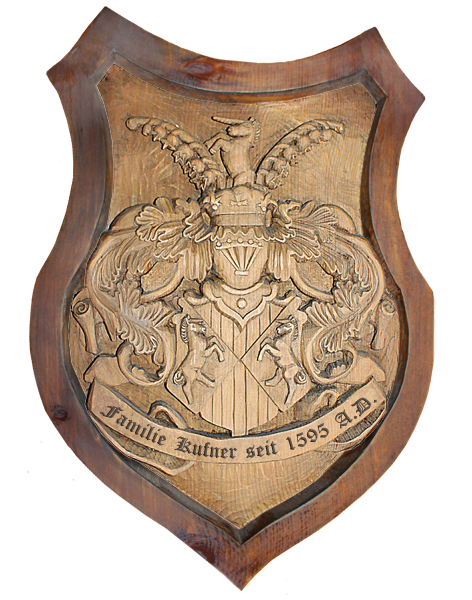
It sounds simple. It rarely is. But the Kufner family has done exactly that — not once, but several times, across five generations. Each time, they secured success on their own terms.
KC Wearable Technologies
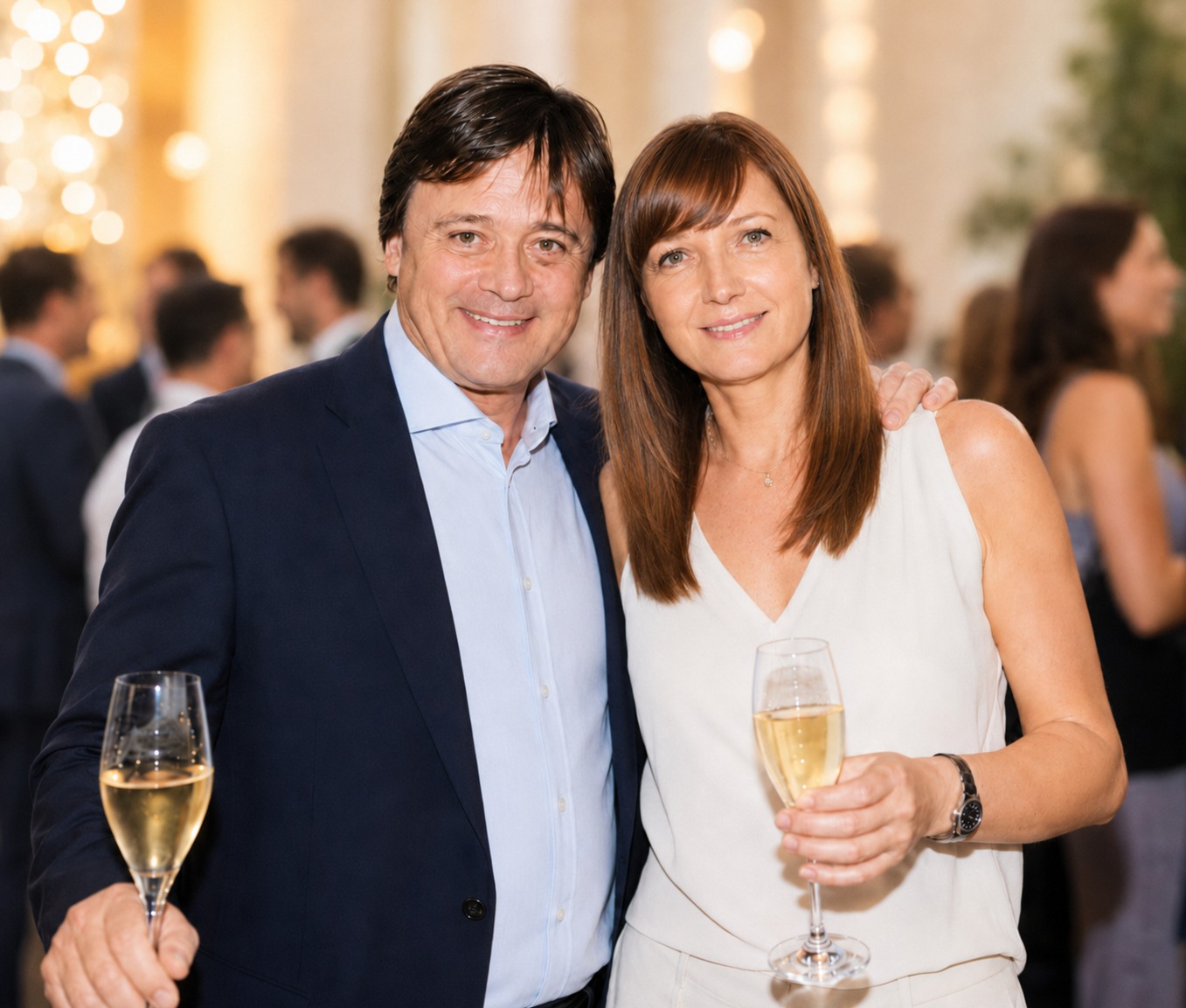
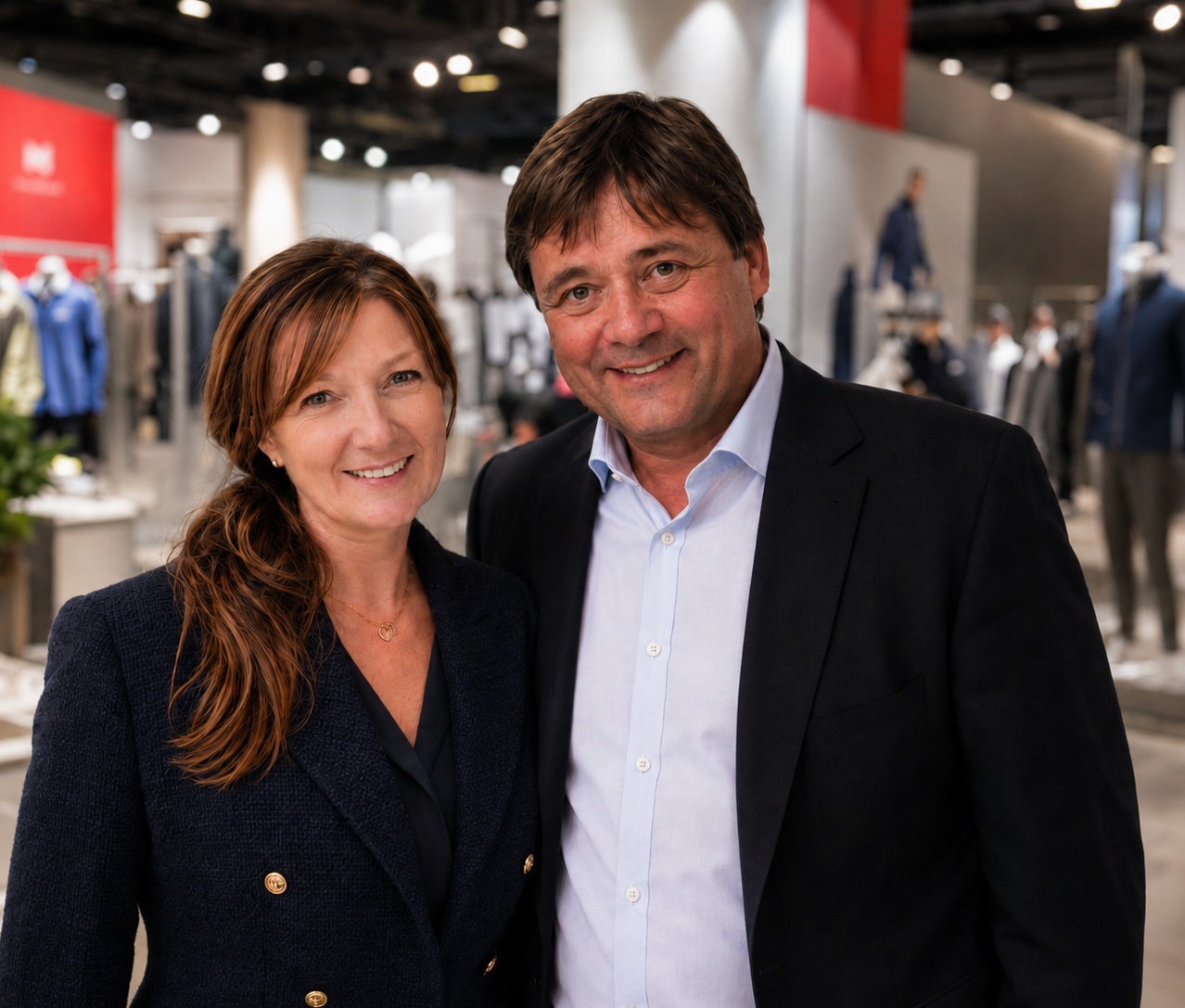
Dominik and Sofia Kufner run KC together, bringing two family traditions — German engineering, Italian creativity — into the same room. Together, they get every product right.
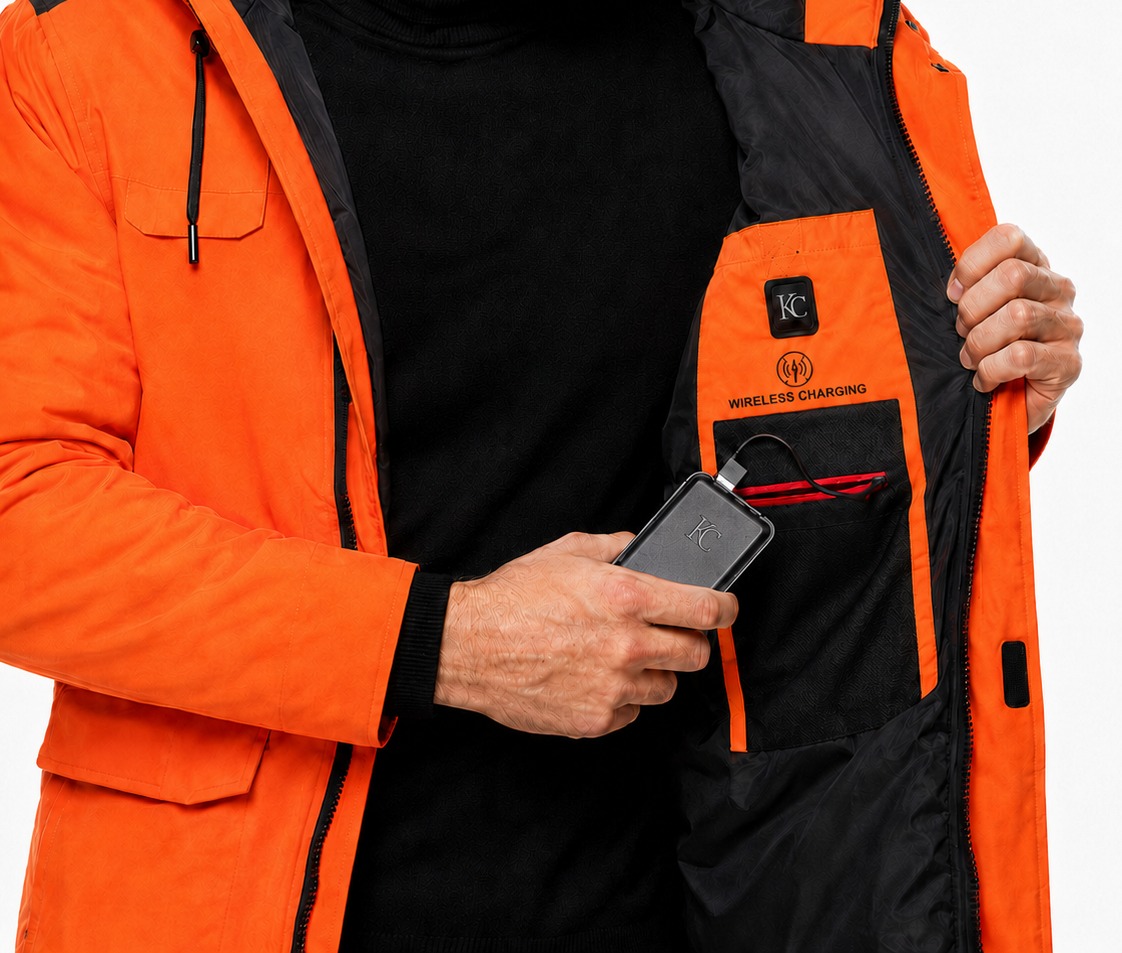
Today, KC has developed a wide range of smart textile technologies. Active liquid cooling vests keep people working in extreme heat, while graphene heating systems hold steady down to −40°C. Silverguard pockets protect cards from unauthorised scanning. Odour-absorbing inlays keep garments fresh. TechnoBag handbags wirelessly charge a phone and track its location. NFC technology turns everyday objects — buttons, labels, even physical media — into a bridge to digital experiences.
With each innovation, our products become smarter, more interactive, and more useful in everyday life — built on the same instinct that has guided five generations: when the market doesn't fit, build a new one.
What hasn't changed in 160 years
Create the market
Every generation faced initial resistance to new ideas. Every generation pushed through it anyway.
Engineering first
From the fusing press to graphene heating — real engineering, not marketing concepts.
Built on partnership
From father-and-son teams to Dominik and Sofia today — KC has always been built by people working closely together.
160+ years, ten turning points
Every generation faced the same choice — adapt to an existing market, or build a new one. They built.

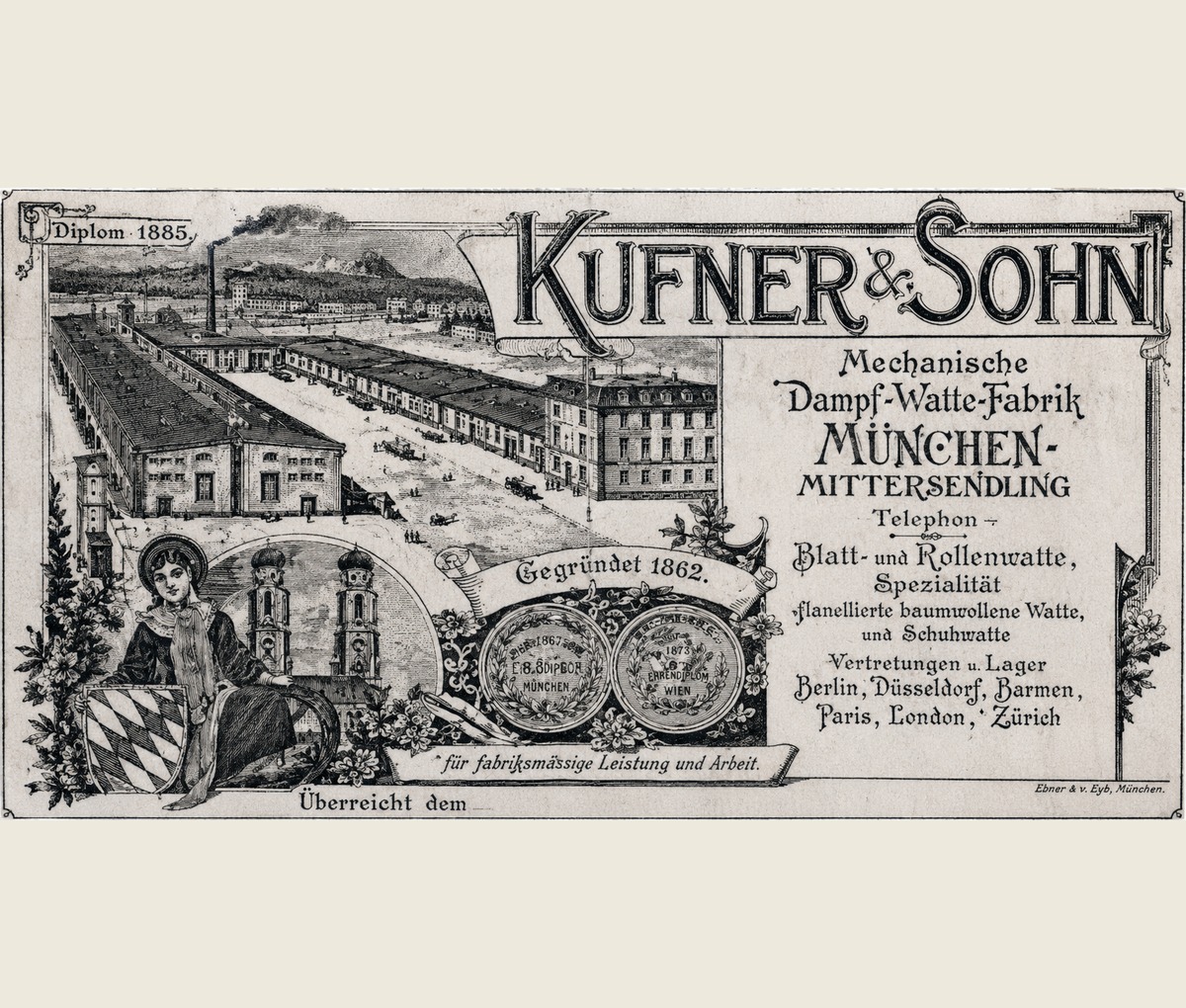
In his early years, Bartholomäus Kufner became a freedom fighter for Garibaldi. Upon his return, he built up the Kufner business at a time when tailored garments depended heavily on wadding to give suits their shape.
The material worked, but it was heavy, thick and stiff. The opportunity was not only to make more of it, but to make production more advanced, more reliable and more industrial.
Bartholomäus understood that technology could change textile production. He was the first to connect his factory to the Munich power grid and switch to electrical power and light. Automated production allowed Kufner to manufacture products that became known far beyond Germany.
A new product, produced in a new way, helped shape a new market.

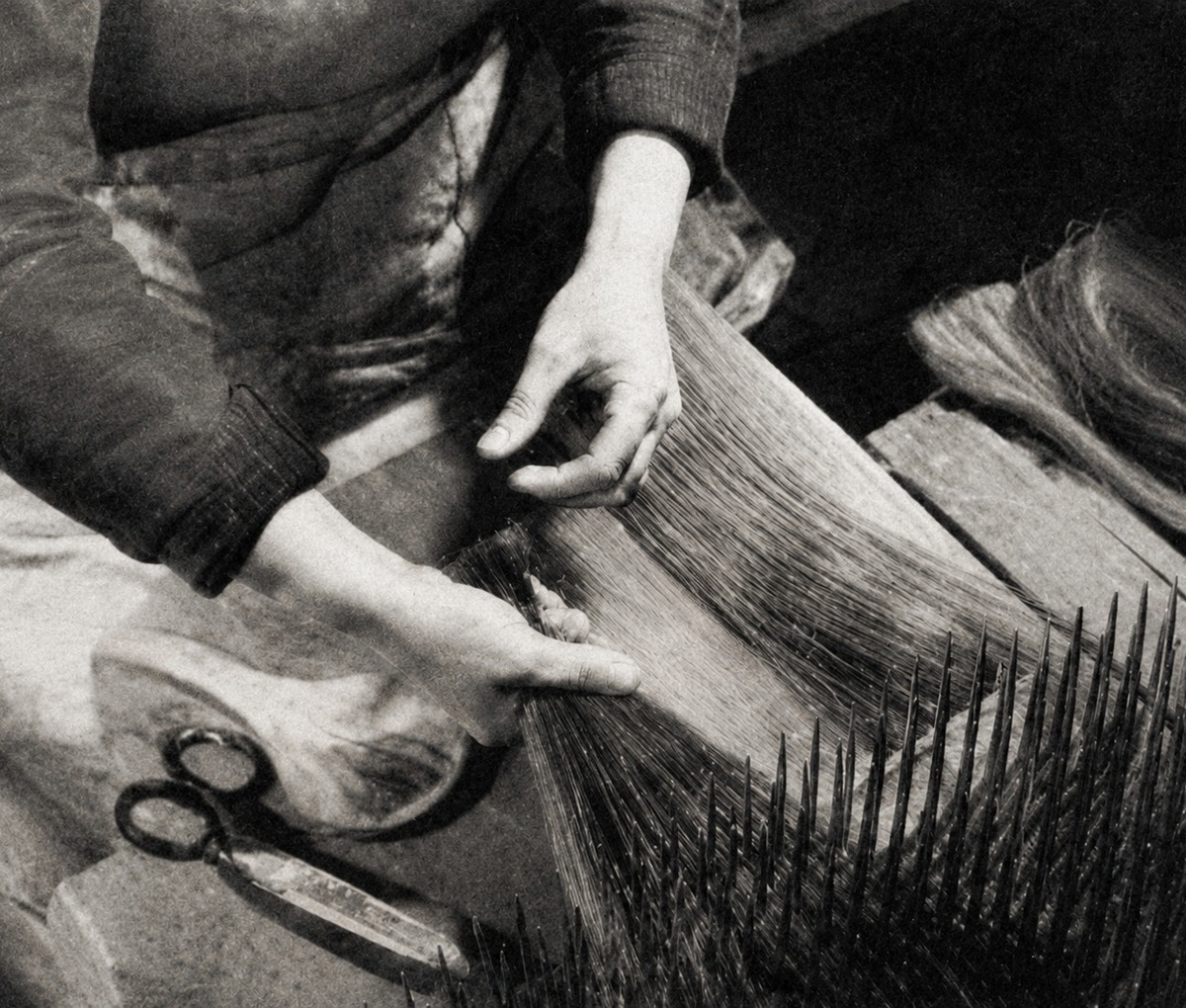
In the early 1900s, Dominik's great-grandfather Josef Adolf Kufner took over the business. Inspired by uniforms, more and more consumers were drawn to tailored suits, and the clothing industry needed inner materials that could provide shape without the weight and stiffness of traditional wadding.
As an engineer, Josef Adolf Kufner developed a weaving machine that could draw single horsehairs into textile fabrics as weft yarns. This created a material that was lighter than wadding, but still gave the garment the resilience and stability that tailoring required.
The single-drawn horsehair products were born. These were among the first products that would later be referred to as interlinings.
They changed men's tailored clothing and helped the company rebuild after its destruction in World War I.
Again, a new product had created a new market.


In the 1930s, Dominik's great grandfather, Dr.-Ing. Georg Kufner, took over the business. The single-drawn horsehair products had been a breakthrough, but they were still stiff, expensive and limited by the natural length of the horsehair.
Horsehair, as a single strand from a horse's mane or tail, is naturally short. This limited the width and flexibility of the fabrics that could be produced.
Georg Kufner invented a new type of spinning machine that allowed horsehairs to be wrapped by cotton threads in two directions, creating an endless horsehair yarn. This opened the door to twisted horsehair interlinings in wider widths than the natural length of the horsehair itself.
It was a major rationalization, but also a major product improvement. Interlinings could now become less stiff, more naturally resilient and far more affordable.
In the years that followed, the earlier single-drawn horsehair products were fully replaced on the world market.
Again, a new product had created a new market.
This innovation also helped the company survive World War II, despite the destruction of most Kufner factories. According to family history, Georg Kufner also risked himself and his family by secretly protecting Jewish workers from the Nazis. This forced him and his family to flee to Czechoslovakia, where he still had a factory.

The succession came suddenly. Georg and Joseph Kufner were still young men when their father passed away, and they had to take responsibility for a company that had already survived war, destruction and rebuilding.
By then, interlinings had slowly become lighter. Horsehair was gradually being replaced or blended with wool, rayon and goat hair. But the basic garment-making process had not changed enough.
Interlinings were still basted into suits by hand. This was slow, expensive and labor-intensive. The clothing industry needed a new solution. Tailoring had to become more efficient and more industrial, without losing quality.
Joseph Kufner believed that interlinings could be dot-coated with a heat-activated adhesive and fused to fabrics. To many people around him, this sounded unrealistic.
Even some of his own engineers disagreed and resigned. But Joseph Kufner saw beyond the technical difficulties and continued to develop a wider range of fusible interlinings.
There was still one major problem: garment factories had no practical way to fuse them. So Joseph went to see a friend who owned a leading pressing equipment company called Kannengiesser and asked him to develop one of the first industrial fusing presses for garment production.
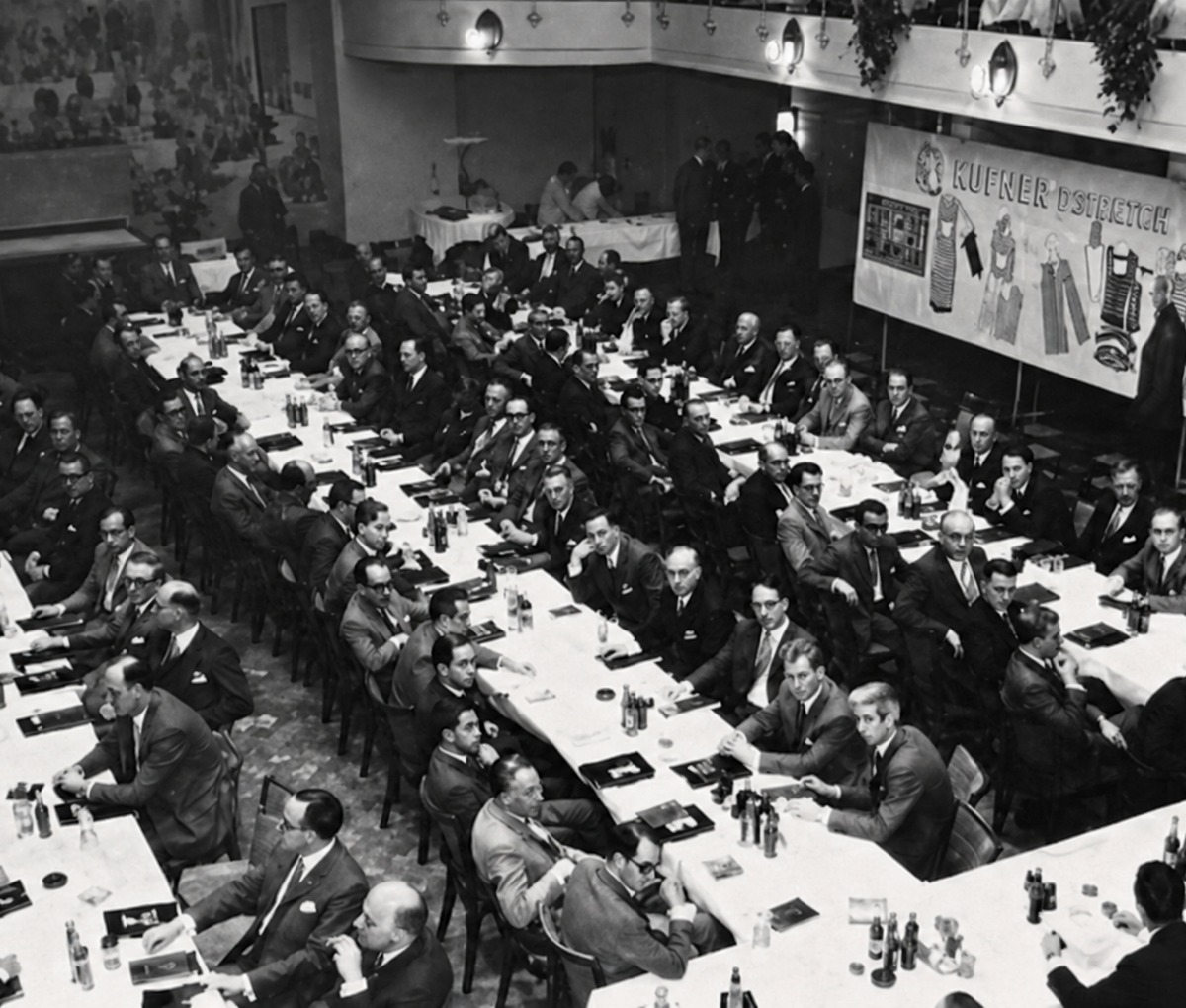
When the prototype was ready, Joseph asked another friend, the owner of the Bayerischer Hof, Munich's most luxurious hotel, to allow him to place the heavy industrial machine in the hotel's elegant ballroom.
He invited his customers and presented a revolution: fusible interlinings that garment factories could apply with a newly developed fusing press. The guests enjoyed the food, but many remained openly skeptical.
Then one customer took a leap of faith. Then the second. Then the third.
Within a few years, fusible interlinings had become the new industry standard, and fusing machines were installed in clothing factories across Germany and then far beyond. More than 50 traditional competitors who had continued producing only hair interlinings disappeared, were absorbed, or were forced to follow the new technology.
Again, a new product had created a new market.
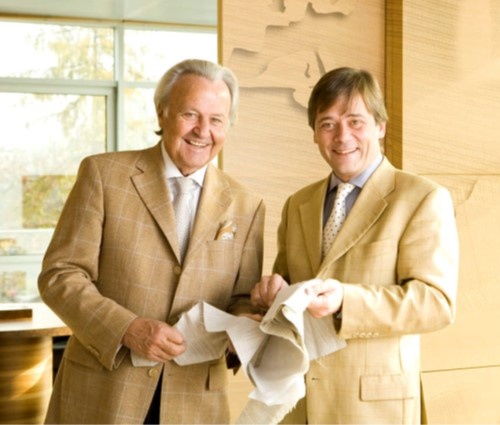
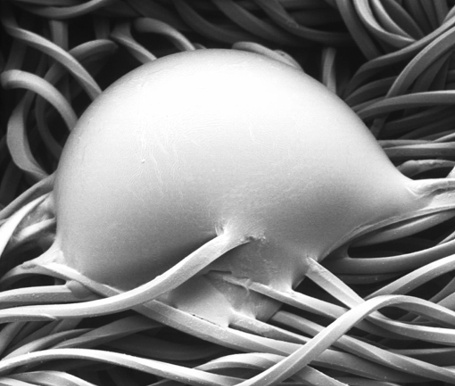
At that time, fashion was changing again. Garments and outer fabrics were becoming softer, lighter and more elastic, but many traditional interlinings could not adapt naturally to this new movement.
Dominik developed elastic fusible interlinings that followed the behavior of the outer fabric more closely. This created a new level of softness, safety and flexibility in garment construction.
Many classic fusing problems were greatly reduced or eliminated. What had once been a new and unusual idea gradually became a standard expectation in many parts of the global clothing industry.
For many years, Dominik went door to door, presenting such developments to clothing companies around the world. He saw the initial hesitation, the doubts and the slow transition that followed. He learned that product development is almost always challenged by resistance in the beginning.
But he also learned something more important: when a new product makes enough sense, it eventually finds its way into the market. And when that happens, the market can change permanently.
Again, a new product had created a new market. Looking back, Dominik recognized that his father was right. If the development is good enough, even small and medium-sized companies can create their own markets.
For Dominik, the sale of the Kufner company also marked a turning point. He felt that the traditional field of interlinings had already been developed to a very high level, and that the next meaningful innovation would have to go beyond the limits of that market.
Together with Sofia Cinel, he founded KC Textil in Munich. The name KC originally came from Kufner-Cinel, and the mission of the new company was to continue innovating in the fashion and textile industry, but in a more open and flexible way.
The historical Kufner companies had always been shaped by their own factories and by the question of what could be produced within those factories. KC was different. Its developments were no longer limited by one production system, one product category or one material technology.
From the beginning, KC worked on long-term product and market development projects for international textile, interlining and garment companies, including Ilshin, Motives, Haama and Chargeurs. At the same time, Dominik and Sofia gradually built a broader innovation portfolio around the idea that garments and accessories could do more than simply cover, shape or decorate.
The company developed a network of specialized partners and suppliers and accumulated experience in wireless charging, heating, cooling, illumination, NFC components, silver-based protection, activated carbon textiles, smart handbags, GPS trackers, smart headwear and many other functional product ideas.
The creation of the Shenzhen office in 2016 made many of these developments easier to coordinate, industrialize and produce at scale.
Again, a new product direction had opened the way to a new market.

In 2020, Dominik and Sofia founded KC Wearable Technologies Srl in Italy, fully focused on wearable technologies, smart textiles and functional components for garments and accessories.
By 2026, KC had worked with more than 50 leading fashion, workwear and technical clothing companies worldwide. What began as a move beyond interlinings had become a broader mission: to create new functions in clothing and accessories, and to develop the component packages that allow brands and manufacturers to integrate them into their own products.
KC's flagship developments include CoolStream, Heatcore, OdAbsorb, NFC accessories, Silverguard pockets, wireless charging systems and smart bags. The individual technologies are different, but the idea behind them is the same: clothing and accessories should no longer be limited to what they have always done.
For the Kufner family, this is not a break from the past. It is the continuation of the same story.
First, textiles gave garments structure. Then interlinings became lighter. Then they became fusible. Then they became elastic.
Today, KC asks what clothing and accessories can become when new functions are built into them from the beginning.
Again, the purpose is not only to improve an existing product.
The purpose is to create new possibilities, and with them, new markets.
Want to build something new together?
160 years of engineering instinct, now applied to your wearable technology project.
Talk to our product team